
SureFeed Microchip Pet Feeder: how three cats finally eat their own food
My experience with the SureFeed Microchip Pet Feeder in a house with three cats, two prescription diets and one cat that eats three times as fast as the others.
Published · August 6, 2026
For years, I stood next to the bowls at every meal.
Purely as a supervisor, because otherwise the fastest cat clears all three bowls.
We have three cats, and they eat so differently that "just put down three bowls" has never worked as a plan.
Two of them eat slowly, spread across the whole day. Both need a specific food because of physical conditions, one hypoallergenic, one gastrointestinal. There is no room to negotiate on that.
The third one eats everything. At roughly three times the speed.
Anyone who has run a multi-cat household with two prescription diets knows how that ends. The fast cat finishes her portion before the others have properly started, then chases them off their bowls and eats their food too.
So there were two options. Stand there until everyone is done. Or sort the cats into separate rooms for every meal.
Both work. Both are ridiculous in the long run.
What the SureFeed actually does
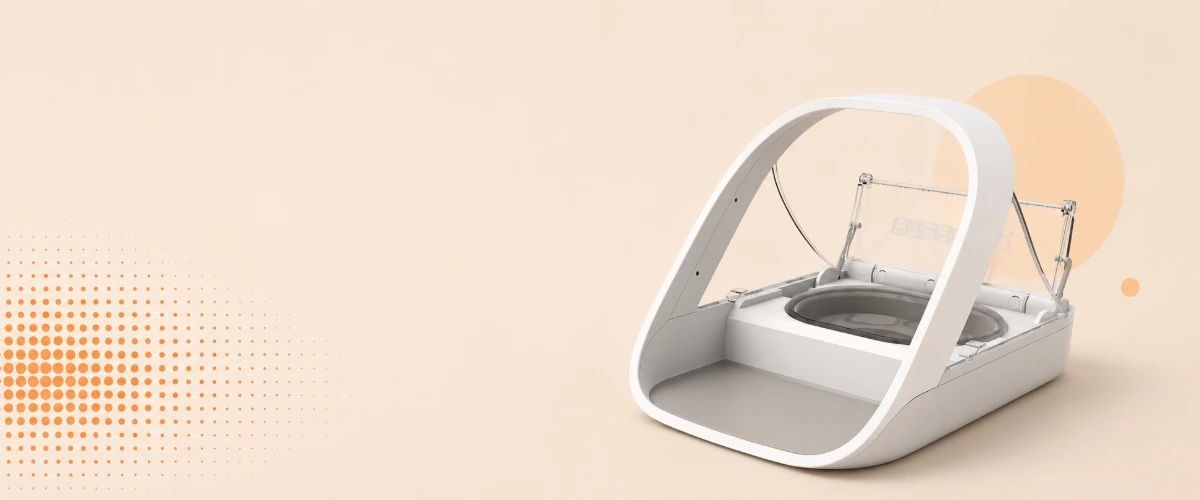
The SureFeed Microchip Pet Feeder from Sure Petcare dispenses no food at all, despite the name. It is a bowl with a lid and a chip reader.
When the right cat stands in front of it, the lid opens. When she steps away, it closes again.
What it reads is the microchip the cat already carries under her skin. The feeder handles the usual chip formats, 9, 10 and 15 digits, and stores up to 32 animals. For a cat without a chip, an RFID collar tag is included.
You also get a normal bowl, a split bowl for two kinds of food and a mat for whatever ends up next to it. Capacity is 400 ml, so two pouches of wet food fit.
Power comes from four C cell batteries that last at least six months according to the manufacturer. So the bowl can sit where the cat eats anyway, rather than wherever the nearest socket happens to be.
Setup: minutes, if your cats are chipped
All three of ours are chipped, so setup was unremarkable. Press the button, let the cat eat, chip stored.
For nervous animals there is a training mode where the lid stays put at first and then moves further in stages, until the cat accepts the sound.
That barely mattered here. Where there is food, skepticism turns out to be negotiable pretty fast.
What changed day to day
Feeding is no longer an event.
The two slow eaters can take their time. Their food sits out in the open and is still unreachable for the third one.
Between bites the lid is closed, so the wet food does not dry out. For cats that keep coming back over several hours, that matters more than any other feature.
And I no longer stand there.
That sounds like a small thing, but it is the entire difference. Before, every meal was an appointment I had to attend. Now it is just food, sitting there.
What I like about it
- The key is already inside the cat. No collar, no tag, no accessory to lose.
- It solves exactly one problem, and solves it properly. Who eats which food is no longer up for negotiation.
- Prescription food becomes reliable again. With hypoallergenic or gastrointestinal food, it genuinely matters whether the right cat ends up with the right food inside her.
- The split bowl is a thoughtful touch. Wet and dry side by side, without the two developing a shared consistency.
- It needs no attention. No app, no firmware, no account. Batteries in, cat registered, done.
The honest limits
Now the part that actually annoys me.
One of our cats eats like a toddler. With commitment, and in every direction.
When gravy runs past the bowl insert and works its way into the gaps of the housing, it gets unpleasant. The bowl can go in the dishwasher, the mat and lid are hand wash. But the housing must never go in water, you only wipe it with a damp cloth. And taking the whole thing apart only works with a lot of patience and a feel for it. It certainly does not feel like the manufacturer had disassembly in mind.
With dry crumbs, none of this matters. With dried gravy in an edge your finger cannot reach, it does.
Three more things worth knowing beforehand.
It does not portion anything. "Feeder" here only means controlled access. If you want a device that serves breakfast at seven on its own, you want something else.
It costs around €130, and in a household with several cats you rarely buy just one.
And it manages the bowl, not the mood in the room. A cat that sits down next to it and waits will still sit there. The lid stays shut, but the device does not do social work for you.
Would I buy it again?
Immediately.
For a single cat it is probably a luxury, unless the wet food should stay fresh longer or somebody who is not allowed a snack keeps taking one. A dog in the house counts here too.
For a household with several cats, one of which eats fast while the others need a specific food, it is close to irreplaceable.
You will never get it properly clean. But it took over a job I did myself for years, and did it worse than the feeder does.
✦I no longer stand next to the bowls keeping track of who empties which one. Every cat gets her own food, including the slow one.
More good stuff
 Heißer Tipp
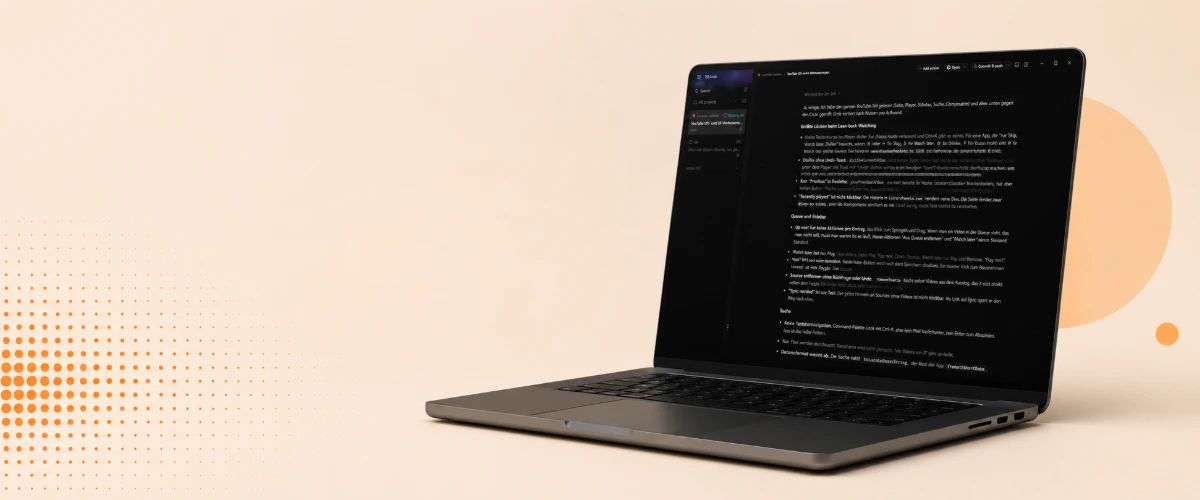
T3 Code: my Claude and Codex subscriptions in one app, without the nagging worry
My experience with T3 Code as a front end for Claude Code and Codex, using both subscriptions the way the providers intend while still switching models freely.
Pi stays my harness. But as soon as my Claude subscription has to be part of the deal, T3 Code is the front end that lets me stop thinking about account bans.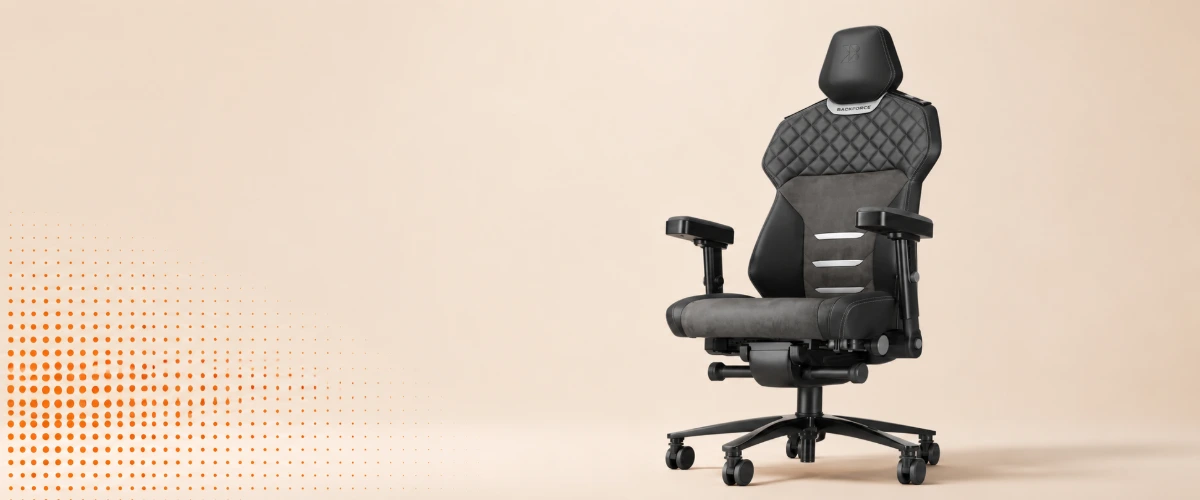 Würd ich wieder kaufen
Backforce One Plus: the chair I only write about because something broke
My experience with the Backforce One Plus after 2.5 years: a good office chair, but the real story is the warranty claim and how fast support actually was.
Two years of just being a good chair. And when something did break, support was faster than any expectation. That is exactly why I would buy it again.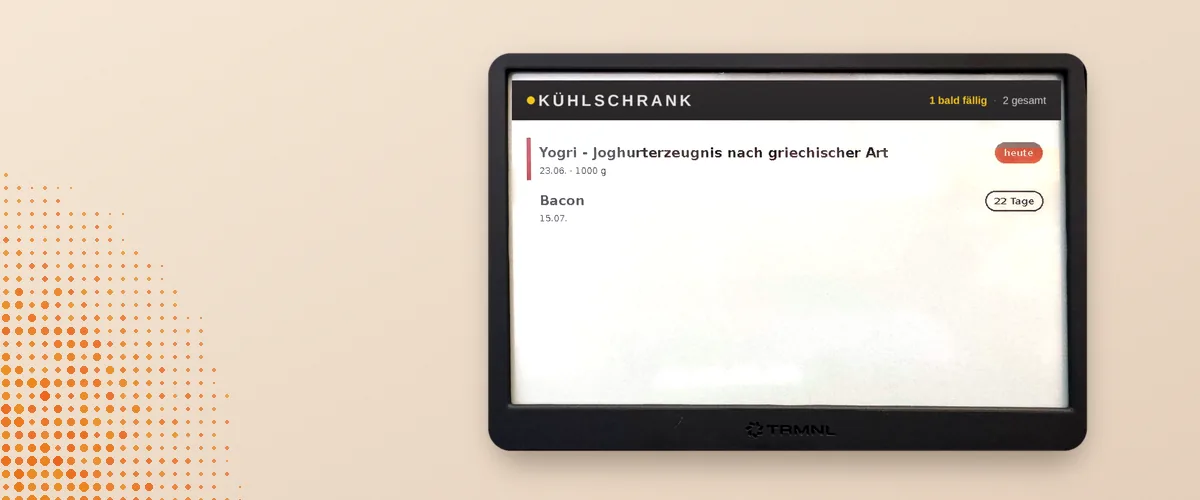 Game Changer
TRMNL BWRY: An E-Ink Display Against Expired Yogurt
My experience with the TRMNL BWRY as a kitchen display for a self-built fridge tracker: expiry dates, bin collection days, and an honest food-waste stat.
Four colors, one glance while getting coffee, and expired yogurt went from the rule to the exception in our house.