
UniFi Dream Router 7: the small network cylinder that can do a lot
My experience with the UniFi Dream Router 7 as a compact way into UniFi, WiFi 7 and a cleaner home network in my own house.
Published · May 14, 2026
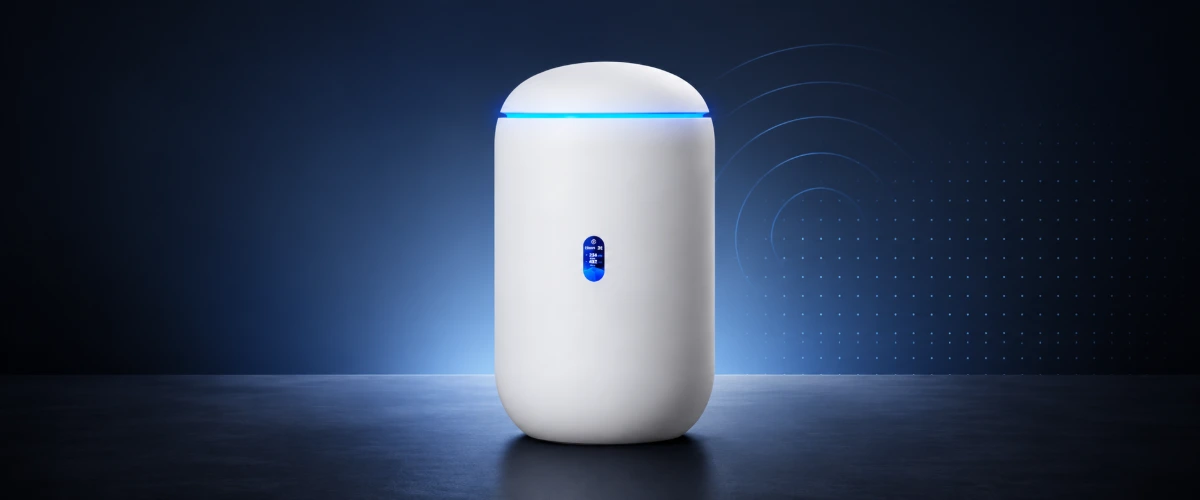
I have a weakness for network gear.
That is not cool, I know.
Other people buy nice speakers or plants. I get excited about a device that can handle VLANs cleanly, does not look completely ugly and, ideally, does not give me a new puzzle every second evening.
The UniFi Dream Router 7 hits exactly that uncomfortably specific corner of my brain.
Why the Dream Router 7 is interesting
The Dream Router 7 is basically a compact UniFi starting point for people who want more than a classic ISP router, but do not immediately want to plan a network rack in the hallway.
Router, UniFi console, integrated WiFi 7, small switch, a bit of PoE and enough ports that you do not instantly need another box. On paper, it reads like a small all-rounder.
In everyday use, that is exactly the appeal: fewer separate pieces, less "where does the controller actually run?", more overview.
Pretty nice for a house
In an apartment, a router can simply be a router.
In a house, it becomes a small infrastructure project.
Suddenly there are floors, thick walls, garden corners, cameras, access points, home office, streaming, smart lights and some device that insists on connecting to the wrong access point.
The Dream Router 7 does not automatically solve every one of those problems. WiFi is still WiFi, and walls are unfortunately still walls. But it gives the whole thing a clean base.
That is what I like about UniFi: I can see what is happening. Not just "internet works" or "internet does not work", but devices, channels, clients, load and the places where my gut feeling is talking nonsense again.
What I like about it
- Everything feels cleaner. One device as the center feels better than a stack of accidental gear.
- WiFi 7 is built in. None of my devices need it yet, but I dislike routers feeling old after one year.
- UniFi stays UniFi. Overview, device management, networks, rules and the small feeling of owning a tiny control room.
- PoE on the device is practical. Not for everything, but exactly for that one corner where you would otherwise hunt for another power brick.
The most important point is less technical: the Dream Router 7 makes me want to build the home network properly.
That is dangerous, but good.
The honest limits
If you just want internet, this is too much.
UniFi has become more approachable, but it is still a system for people who want to know what is happening. If you never open settings, you may get more surface area than you need.
And for a larger house, the integrated access point probably will not be the whole truth. Depending on the building, you will need additional APs. Physics is sadly not cancellable as a subscription.
Fits nicely with Hermes
My UniFi setup became really interesting when I stopped only setting it up and started questioning it regularly.
Hermes as an AI agent helped with that surprisingly well. I wrote the concrete network deep dive in my UniFi AI agent audit.
The Dream Router 7 is a nice foundation for that: enough control, enough data, enough UniFi, without turning the basement into a tiny data center.
Would I buy it?
Yes, if I want to build a home network intentionally.
It is not the cheapest solution, and not one you plug in and never look at again.
It is the central base for a home where tech is allowed to be a little more orderly.
And if you can get excited about routers, the Dream Router 7 is pretty good stuff.
✦The Dream Router 7 is not a toy router. It is the moment where a home network suddenly wants to become tidy.
More good stuff
 Heißer Tipp
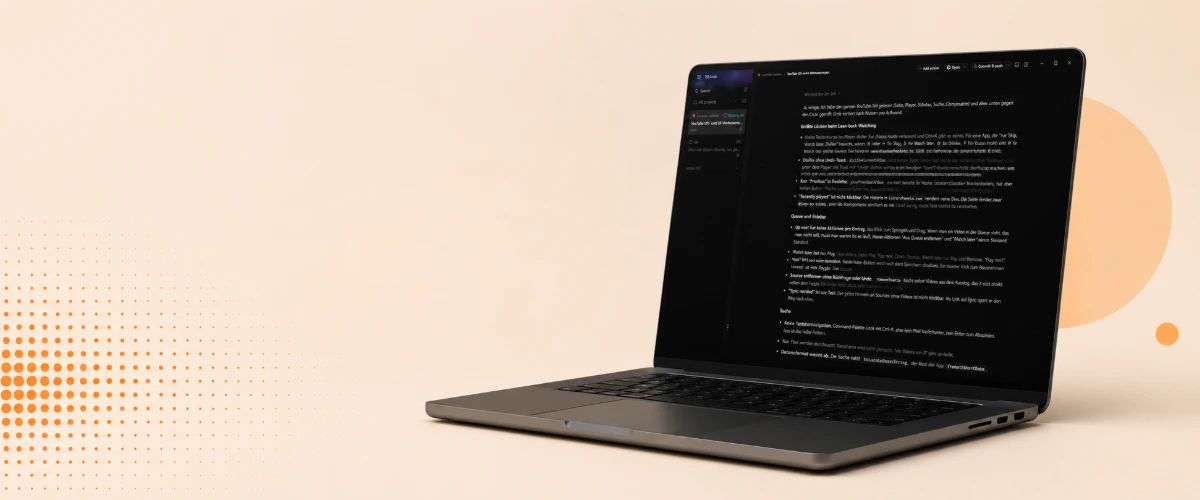
T3 Code: my Claude and Codex subscriptions in one app, without the nagging worry
My experience with T3 Code as a front end for Claude Code and Codex, using both subscriptions the way the providers intend while still switching models freely.
Pi stays my harness. But as soon as my Claude subscription has to be part of the deal, T3 Code is the front end that lets me stop thinking about account bans.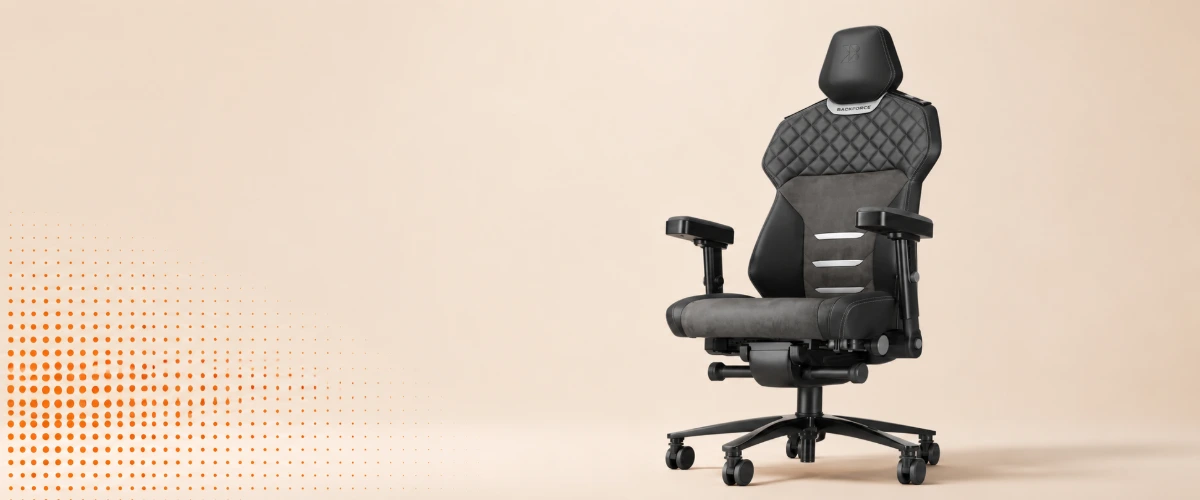 Würd ich wieder kaufen
Backforce One Plus: the chair I only write about because something broke
My experience with the Backforce One Plus after 2.5 years: a good office chair, but the real story is the warranty claim and how fast support actually was.
Two years of just being a good chair. And when something did break, support was faster than any expectation. That is exactly why I would buy it again. Game Changer
SureFeed Microchip Pet Feeder: how three cats finally eat their own food
My experience with the SureFeed Microchip Pet Feeder in a house with three cats, two prescription diets and one cat that eats three times as fast as the others.
I no longer stand next to the bowls keeping track of who empties which one. Every cat gets her own food, including the slow one.